

At Spark Healthcare, we often encounter questions about the side effects of ADHD medications. One common concern is: does ADHD medication cause weight loss?
This blog post explores the relationship between ADHD medications and weight changes, examining the potential mechanisms and considerations for patients and healthcare providers.
We’ll dive into the types of ADHD medications, their effects on appetite and metabolism, and the importance of medical supervision when managing both ADHD symptoms and weight.
ADHD Medications Explained
Stimulants: The Primary Treatment Option
ADHD medications play a vital role in managing symptoms of attention deficit hyperactivity disorder. Stimulant medications top the list as the most frequently prescribed ADHD treatments. These medications increase dopamine and norepinephrine levels in the brain, which improves focus and reduces impulsivity. The two main types are methylphenidate (e.g., Ritalin) and amphetamines (e.g., Adderall).

The Centers for Disease Control and Prevention report on the prevalence of diagnosed ADHD in children and adolescents ages 5-17 years. However, they don’t provide specific data on medication response rates.
Non-Stimulant Alternatives
For patients who don’t respond well to stimulants or experience significant side effects, non-stimulant medications offer an alternative. These include drugs like atomoxetine (Strattera), guanfacine (Intuniv), and bupropion (Wellbutrin). They target different brain mechanisms, often focusing on norepinephrine receptors or other neurotransmitter systems.
Non-stimulants typically carry a lower risk of abuse and may cause fewer sleep disturbances. However, they can take longer to show effects (sometimes up to several weeks).
Side Effects and Monitoring
ADHD medications, while highly effective, come with potential risks. Common side effects include:
- Appetite suppression and weight loss
- Sleep disturbances
- Mood changes
- Increased heart rate and blood pressure
Patients should work closely with their healthcare providers to monitor these effects. Regular check-ins and adjustments to medication types or dosages are often necessary.
The American Academy of Pediatrics provides clinical practice guidelines for the diagnosis, evaluation, and treatment of ADHD in children and adolescents. These guidelines include recommendations for monitoring patients on ADHD medications.
Comprehensive Treatment Approach
ADHD medications (when used correctly) can transform lives. However, they represent just one part of a comprehensive treatment plan. Behavioral therapies, lifestyle changes, and ongoing support all play essential roles in managing ADHD effectively.
As we move forward, it’s important to understand how these medications might affect weight. The next section will explore the specific connection between ADHD medication and potential weight loss, shedding light on a common concern for many patients and healthcare providers.
How ADHD Medications Affect Weight
Appetite Suppression: A Primary Side Effect
ADHD medications, particularly stimulants, can significantly impact weight. One of the most noticeable effects is appetite suppression. Families largely felt that the benefits of ADHD medication outweighed the side effect of appetite suppression. This effect extends to adults as well.

The appetite-suppressing effect is typically strongest when the medication reaches its peak in the body. For many patients, this results in reduced hunger during the day, followed by increased appetite in the evening as the medication wears off. This pattern can lead to skipped meals and potential nutritional imbalances if not managed properly.
Metabolic Changes and Energy Expenditure
ADHD medications, especially stimulants, can increase metabolic rate and energy expenditure. Preliminary findings show that methylphenidate (MPH) has the potential to counter the adaptive thermogenic process commonly seen in weight loss.
This increased energy expenditure, combined with reduced calorie intake due to appetite suppression, often results in weight loss. The effect is usually most pronounced in the first few months of treatment and may stabilize over time.
Altered Eating Patterns and Food Preferences
Beyond simple appetite suppression, ADHD medications can change how and what patients eat. Many report a decreased interest in food overall, with some describing a change in taste preferences. Foods that were once appealing may become less enticing, while others might suddenly seem more palatable.
These shifts in eating patterns can present challenges, especially for parents of children with ADHD. It’s important to maintain a balanced diet despite these changes. The Academy of Nutrition and Dietetics recommends focusing on nutrient-dense foods and ensuring regular meal times, even if portions are smaller.
Managing Nutrition on ADHD Medication
For adults managing their own medication and diet, planning becomes key. Preparing healthy, easy-to-eat snacks and meals can help maintain proper nutrition even when appetite is low. Setting reminders for meals and snacks can also be helpful, as the reduced appetite might mean you’re less likely to feel hunger cues.
While weight loss is common, it’s not universal. Some patients (particularly those who previously used food as a coping mechanism for ADHD symptoms) might find that improved impulse control leads to more mindful eating and better food choices.
The impact of ADHD medications on weight can vary significantly from person to person. In the next section, we’ll explore the potential risks and considerations associated with these weight changes, and discuss the importance of medical supervision throughout the treatment process.
Navigating the Weight Loss Effects of ADHD Medication
Short-Term vs. Long-Term Weight Changes
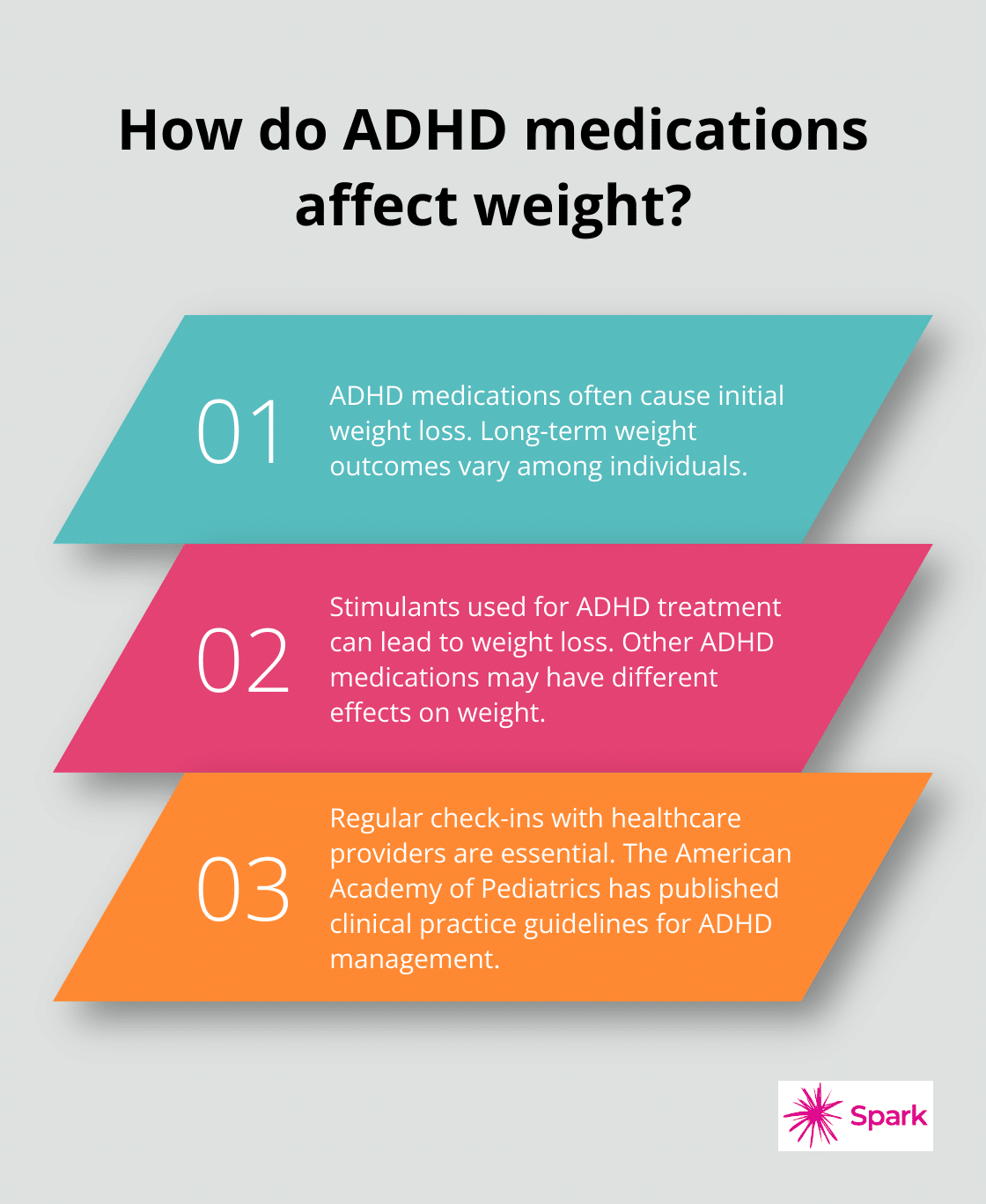
ADHD medications impact weight, but these effects aren’t straightforward. Initial weight loss occurs frequently, but long-term outcomes vary. Studies show that stimulants used to treat ADHD can cause weight loss, while other medications may have different effects.
Nutritional Challenges and Solutions
The appetite-suppressing effects of ADHD medications can lead to nutritional challenges. Recent research does not allow for specific recommendations regarding the use of micronutrients or probiotics in ADHD management.
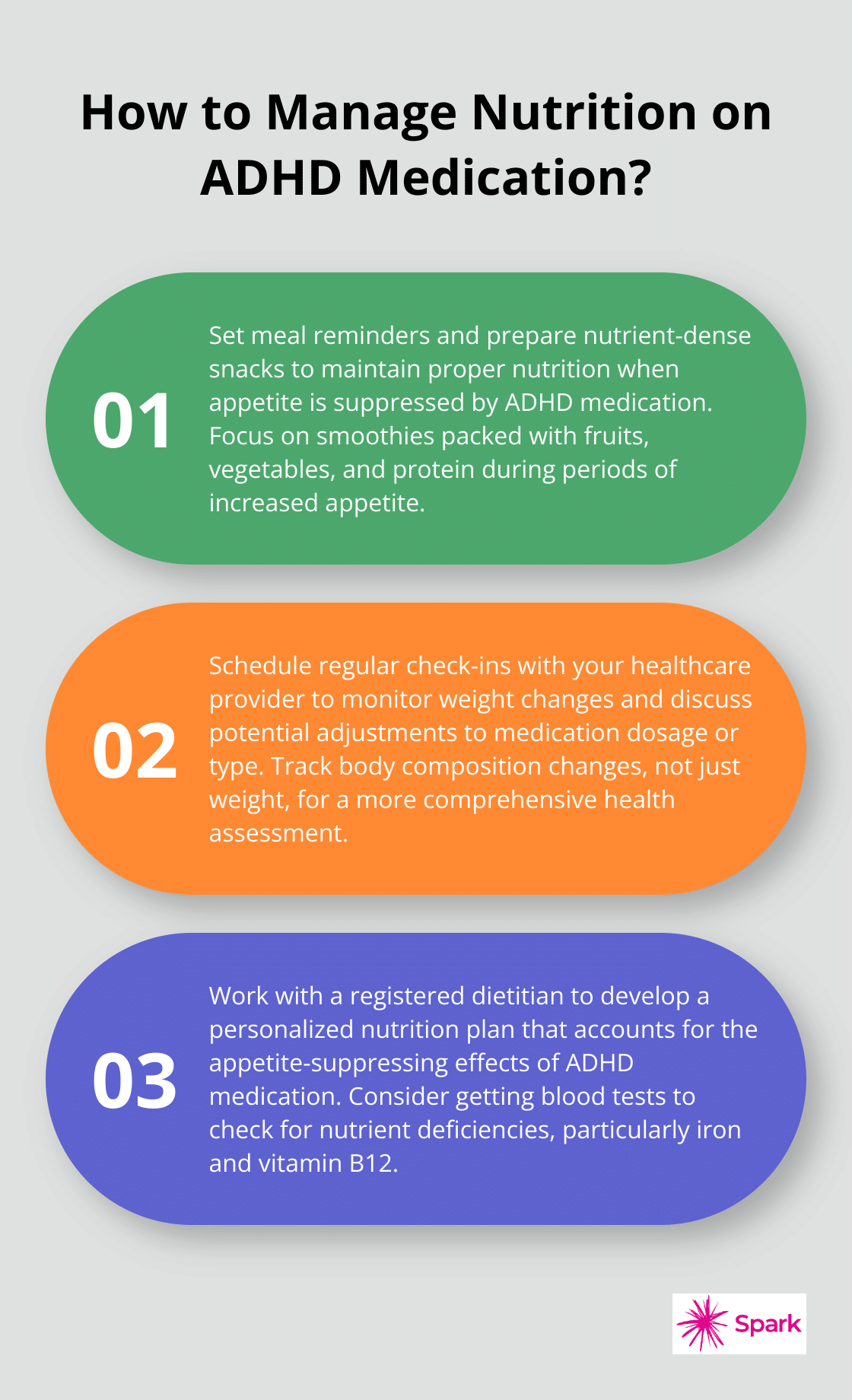
To combat potential nutritional issues, patients should focus on nutrient-dense foods during periods of increased appetite. Smoothies (packed with fruits, vegetables, and protein) can provide concentrated nutrition. Setting meal reminders and pre-planning snacks helps maintain consistent eating habits despite reduced hunger cues.
Medical Supervision: A Necessity
Regular check-ins with healthcare providers are essential when managing ADHD medication and weight. The American Academy of Pediatrics has published clinical practice guidelines for the diagnosis, evaluation, and treatment of attention-deficit/hyperactivity disorder in children and adolescents.
For adults, tracking body composition changes (not just weight) provides a more comprehensive picture. Some patients benefit from working with a registered dietitian to develop personalized nutrition plans that account for medication effects.
Monitoring Nutrient Levels
Blood tests to check for nutrient deficiencies, particularly iron and vitamin B12, may be necessary. These nutrients play important roles in cognitive function and energy levels (areas already impacted by ADHD).
Balancing Medication and Diet
The interplay between ADHD medication and weight requires careful management. While weight loss can be a side effect for some, it requires careful oversight to ensure overall health isn’t compromised. Proactive monitoring and adjustments to both medication and diet are key to achieving the right balance. Consider appetite stimulants or nutritional supplements if significant weight loss occurs.
Final Thoughts
ADHD medications can cause weight loss, especially in the short term. This effect primarily results from appetite suppression and increased metabolism associated with stimulant medications. The impact on weight varies among individuals and may change over time.
Managing ADHD symptoms while maintaining a healthy weight requires a balanced approach. This involves regular monitoring of physical and mental health, adjusting medication dosages when necessary, and implementing strategies to ensure proper nutrition. Patients need to adapt their eating habits and focus on nutrient-dense foods to counteract reduced appetite.
At Spark Mental Health, we offer personalized care plans, medication management, and ongoing support to help patients navigate their ADHD journey effectively. We work closely with each individual to find the right balance between symptom management and overall health (including weight considerations). Our telepsychiatry services provide comprehensive care for those seeking to manage ADHD and its treatment effects.