

Trauma-Focused Cognitive Behavioral Therapy (TF-CBT) is a powerful tool for therapists working with children and adolescents who have experienced trauma. At Spark Mental Health, we recognize the importance of evidence-based interventions in addressing the complex needs of trauma survivors.
This comprehensive guide explores the TF-CBT manual, providing therapists with essential insights into its core principles, key components, and practical implementation strategies. By understanding and applying this effective approach, mental health professionals can make a significant impact on the lives of young people affected by trauma.
Understanding TF-CBT: A Comprehensive Guide for Therapists
Definition and Core Principles
Trauma-Focused Cognitive Behavioral Therapy (TF-CBT) is a structured, short-term treatment model that addresses the needs of children and adolescents who have experienced trauma. This evidence-based approach combines cognitive-behavioral, attachment, and family therapy elements to help young people process traumatic experiences and develop healthy coping mechanisms.
TF-CBT typically consists of 12-16 sessions, though this can vary based on individual needs. The therapy focuses on helping children and their caregivers understand and manage the impact of trauma. Key components include psychoeducation, relaxation techniques, affective expression and modulation, cognitive coping, trauma narrative development, and in vivo exposure.

A distinctive feature of TF-CBT is its emphasis on caregiver involvement. Parents or guardians actively engage in the therapy process, learning skills to support their child’s recovery and address their own emotional responses to the child’s trauma.
Target Population and Conditions
TF-CBT primarily targets children and adolescents aged 3-18 who have experienced traumatic events. These events may include sexual abuse, physical abuse, domestic violence, community violence, natural disasters, or traumatic loss. The therapy proves particularly effective for those exhibiting symptoms of post-traumatic stress disorder (PTSD), depression, anxiety, or behavioral problems related to their trauma.
The National Child Traumatic Stress Network reports that approximately two-thirds of children experience at least one traumatic event by age 16. TF-CBT provides a structured approach to address the needs of this significant population.
Evidence-Based Effectiveness
Research strongly supports the effectiveness of TF-CBT. Multiple randomized controlled trials have demonstrated its efficacy in reducing PTSD symptoms, depression, and behavioral problems in traumatized youth.
A meta-analysis published in the Journal of Clinical Child & Adolescent Psychology found that TF-CBT outperformed non-CBT interventions in reducing PTSD symptoms, with effect sizes ranging from moderate to large. Additionally, a study in the Journal of the American Academy of Child & Adolescent Psychiatry reported that 80% of sexually abused children who received TF-CBT no longer met diagnostic criteria for PTSD after treatment (compared to only 20% in the control group).
While TF-CBT has shown remarkable success, it’s not a one-size-fits-all solution. Therapists must receive training in the model and adapt it to meet the unique needs of each child and family. This personalized approach aligns with the principles of evidence-based care that many mental health providers (including Spark Mental Health) prioritize in addressing trauma-related mental health issues.
As we move forward, let’s explore the key components of TF-CBT in more detail, providing therapists with a deeper understanding of how to implement this powerful intervention effectively.
Core Elements of TF-CBT
Psychoeducation and Skill-Building
TF-CBT is a components-based treatment model for children who have experienced trauma and their nonoffending caregivers. Therapists explain common reactions to traumatic events, normalize experiences, and introduce coping strategies. They might use age-appropriate books or videos to explain PTSD symptoms, helping children understand their reactions as normal responses to abnormal situations.

Parenting skills form a key focus. Therapists work with caregivers to enhance their ability to support their child’s recovery. This includes teaching positive reinforcement techniques, effective communication strategies, and stress management skills.
Emotional Regulation and Cognitive Processing
TF-CBT emphasizes helping children manage their emotions and thoughts related to trauma. Therapists teach relaxation techniques such as deep breathing exercises, progressive muscle relaxation, or guided imagery to help children cope with anxiety and stress.
Affective expression and modulation play a vital role. Therapists help children identify and express their emotions in healthy ways, using tools like feeling charts, role-playing exercises, or art therapy techniques. The goal: help children understand and manage their emotional responses to trauma triggers.
Cognitive coping and processing form another essential element. Therapists work with children to identify and challenge unhelpful thoughts related to their trauma. For example, a child might believe “It’s my fault this happened,” and the therapist would help them examine and reframe this belief. This cognitive restructuring can significantly reduce symptoms of depression and anxiety associated with trauma.
Trauma Narrative and Exposure
One distinctive aspect of TF-CBT involves the development and processing of a trauma narrative. Children gradually create a detailed account of their traumatic experience, typically written or drawn depending on their age and preferences. This process helps children organize their traumatic memories and reduce the emotional charge associated with them.
In vivo exposure forms another critical component, particularly for children who have developed avoidance behaviors. This involves gradually exposing the child to trauma reminders in a safe, controlled manner. For instance, a child who avoids parks after experiencing trauma there might be slowly reintroduced to park visits with support from their therapist and caregiver.
Collaborative Healing and Future Focus
TF-CBT emphasizes the importance of conjoint parent-child sessions. These sessions allow children to share their trauma narratives with their caregivers in a supportive environment. This sharing can significantly improve family communication and understanding.
The final phase of TF-CBT focuses on enhancing safety and future development. This involves creating safety plans, discussing healthy relationships, and setting goals for the future. It proves essential for helping children move beyond their trauma and develop a sense of hope and resilience.
As we move forward, we’ll explore how therapists can effectively implement these core elements of TF-CBT in their clinical practice, adapting the approach to meet the unique needs of each child and family they serve.
Implementing TF-CBT: A Practical Guide
Assessment and Treatment Planning
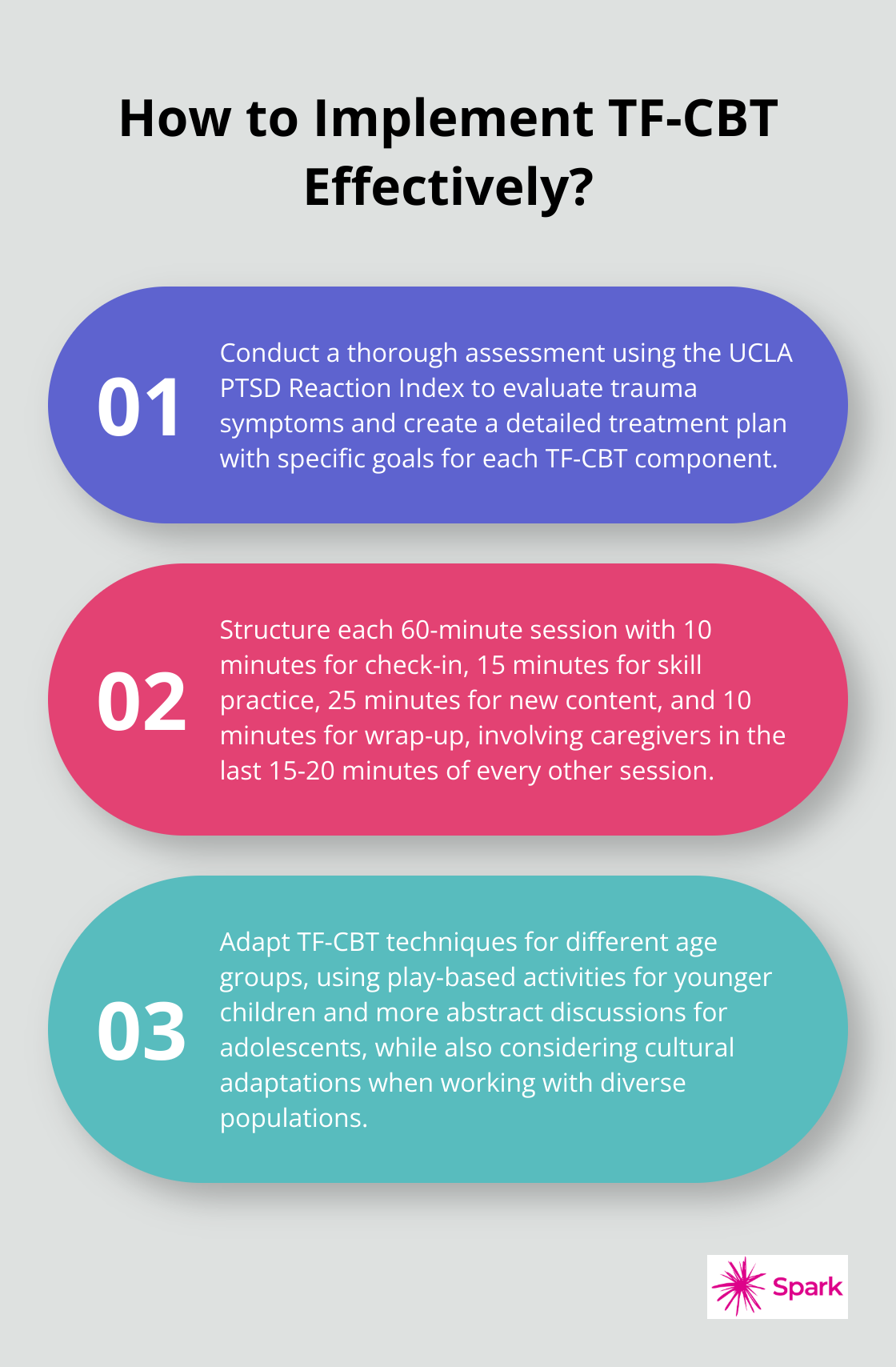
The first step in TF-CBT implementation requires a thorough assessment. Use standardized measures like the UCLA PTSD Reaction Index to evaluate trauma symptoms. This semi-structured clinician interview assesses a child’s trauma history and the full range of DSM-5 PTSD symptoms and diagnostic criteria. Assess for comorbid conditions such as depression or anxiety, as these often co-occur with PTSD.

Treatment planning must prioritize safety. If a child remains in an unsafe environment, address this before trauma processing begins. Create a detailed treatment plan that outlines specific goals for each TF-CBT component. For example, a goal for the relaxation component might state: “Client will demonstrate ability to use deep breathing technique to reduce anxiety in 3 out of 5 attempts.”
Session Structure
TF-CBT typically spans 12-16 sessions, each lasting 50-90 minutes. Adjust this based on the child’s needs and progress. Some children may require more sessions, especially those who have experienced complex trauma.
Structure each session to include time for check-ins, skill practice, and new content introduction. A sample 60-minute session might include:
- 10 minutes: Check-in and homework review
- 15 minutes: Practice of previously learned skills
- 25 minutes: Introduction and practice of new skills
- 10 minutes: Wrap-up and homework assignment
Involve caregivers by dedicating the last 15-20 minutes of every other session to meeting with them alone or with the child, depending on the treatment phase.
Tailoring for Different Groups
Adapt TF-CBT for different age groups and cultural contexts to ensure its effectiveness. For younger children (ages 3-7), use more play-based activities and simple language. For example, teach deep breathing using a “smell the flower, blow out the candle” analogy.
For adolescents, incorporate more abstract thinking and discussions about identity and relationships. Allow them more autonomy in choosing coping strategies that resonate with them.
Cultural adaptation proves equally important. Cultural considerations for TF-CBT with Latino youth have been described, including applications of the therapy for use with this population.
Overcoming Common Challenges
TF-CBT implementation presents several challenges. One common issue is client avoidance. Children may resist discussing their trauma or completing exposure exercises. Address this by explaining the rationale behind exposure, using a gradual approach, and providing ample support and praise.
Another challenge involves caregiver engagement. Some caregivers may hesitate to participate or may have their own trauma histories. Overcome this by emphasizing the importance of their role, providing psychoeducation about trauma’s impact on families, and offering resources for their own mental health support.
Therapist self-care is essential when working with trauma. Implement regular supervision, peer support, and personal self-care practices to prevent burnout and secondary traumatic stress. (This applies to all mental health professionals, including those at Spark Mental Health.)
Final Thoughts
Trauma-Focused Cognitive Behavioral Therapy (TF-CBT) stands as a cornerstone in the treatment of childhood trauma. The TF-CBT manual provides therapists with a comprehensive guide to implement this evidence-based approach effectively. Mental health professionals who follow this manual can significantly improve outcomes for children and adolescents affected by traumatic experiences.
We at Spark Mental Health encourage therapists to pursue TF-CBT training to enhance their skills in trauma treatment. The TF-CBT National Therapist Certification Program offers comprehensive training for clinicians interested in this approach. While TF-CBT is not part of our current offerings, we recognize its value in the broader landscape of mental health treatment.
Mental health professionals should continue to improve their expertise in evidence-based practices like TF-CBT. Spark Mental Health focuses on personalized telepsychiatry for various mental health conditions, supporting the use of proven interventions in appropriate clinical settings. Your investment in learning the trauma focused cognitive behavioral therapy manual could help many children and adolescents build brighter futures.