

At Spark Healthcare, we understand the importance of weight management and the role insurance coverage plays in accessing effective treatments.
As more people turn to medication for weight loss, a common question arises: Does UMR cover weight loss medication in 2025?
We’ll explore UMR’s policies, the latest FDA-approved weight loss drugs, and what you need to know about coverage options.
How UMR Insurance Works
UMR’s Role as a Third-Party Administrator
UMR operates as a third-party administrator for many employer-sponsored health plans. They don’t provide insurance directly. Instead, UMR manages health plans for employers, processes claims, and handles customer service. Your actual insurance coverage comes from your employer, while UMR administers the plan. UMR is the nation’s largest third-party administrator (TPA) with more than 65 years of experience.
Types of UMR Plans
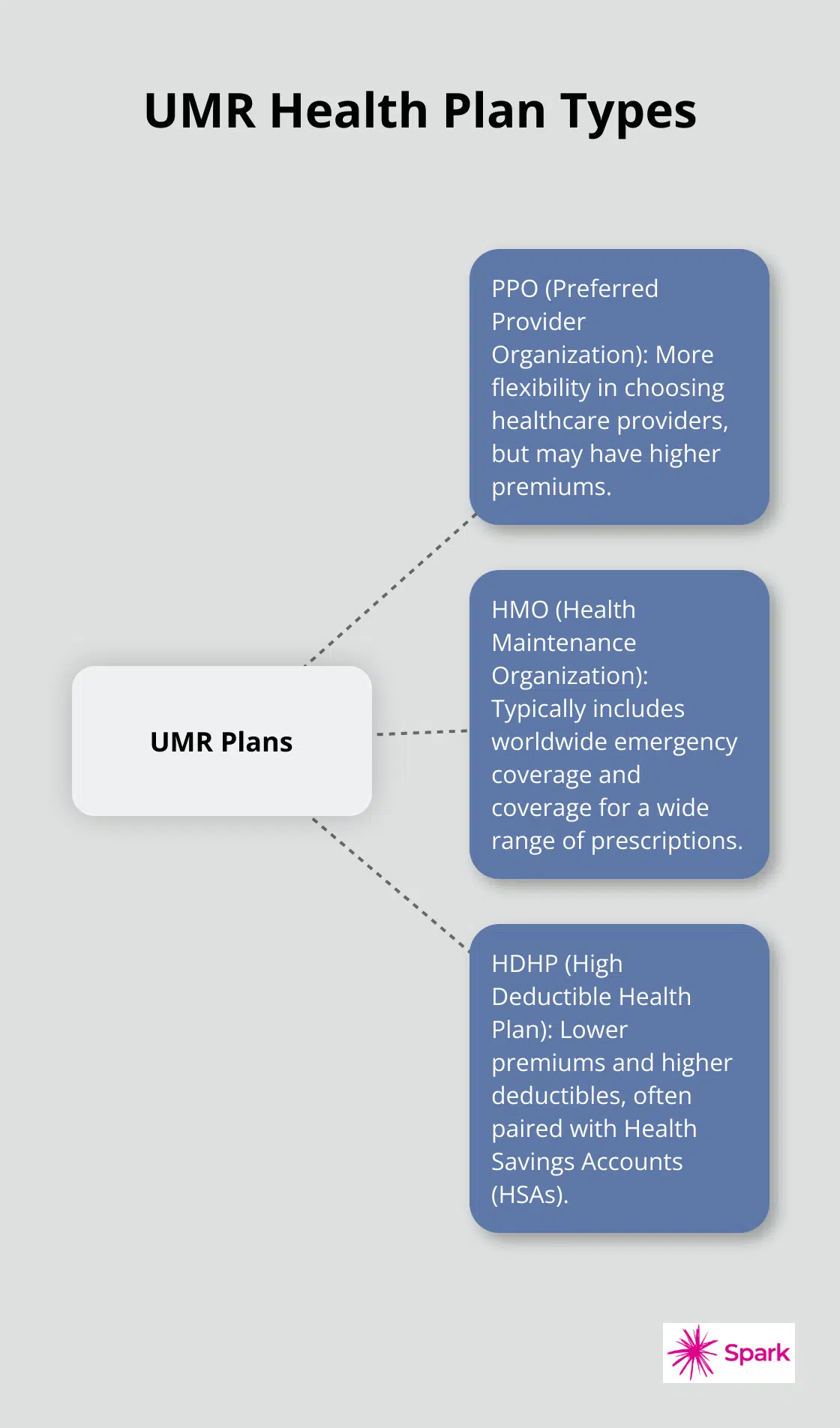
UMR offers several plan types:
- Preferred Provider Organization (PPO): These plans offer more flexibility in choosing healthcare providers but may have higher premiums.
- Health Maintenance Organization (HMO): HMOs typically include worldwide emergency coverage and coverage for a wide range of prescriptions.
- High Deductible Health Plans (HDHP): These plans have lower premiums and higher deductibles, often paired with Health Savings Accounts (HSAs).
Each plan type has different rules for coverage and out-of-pocket costs. It’s important to understand your specific plan details to make informed healthcare decisions.
Prescription Drug Coverage Under UMR
UMR’s prescription drug coverage varies significantly depending on your specific plan. Most UMR plans use a tiered formulary system for prescription drugs. This system categorizes medications into different tiers, with lower tiers having lower out-of-pocket costs.
A Drug List, or Formulary, is a list of prescription drugs covered by your plan. Your plan and a team of health care providers work together in selecting drugs for the formulary.
Check your specific plan details to understand which tier any weight loss medication might fall under. This can significantly impact your out-of-pocket costs.
Many UMR plans also require prior authorization for certain medications (especially newer or more expensive drugs). Your doctor needs to provide additional information to UMR to justify the medical necessity of the prescription before it’s covered.
Understanding these aspects of UMR coverage is essential when considering weight loss medications. Always review your plan documents or contact UMR directly for the most accurate and up-to-date information about your specific coverage.
As we move forward, let’s explore the landscape of weight loss medications in 2025 and how they fit into UMR’s coverage policies.
Weight Loss Drugs in 2025: Options and Considerations
Leading FDA-Approved Weight Loss Medications
The weight loss medication landscape has transformed significantly in recent years. In 2025, several FDA-approved weight loss medications exist for individuals struggling with obesity or weight-related health issues. The most widely prescribed weight loss drugs include semaglutide (Wegovy), tirzepatide (Zepbound), and liraglutide (Saxenda). These medications belong to a class called GLP-1 receptor agonists, originally developed for diabetes management. They function by mimicking hormones that regulate appetite and food intake.
Semaglutide has produced impressive results in clinical trials. The STEP 1 trial revealed that semaglutide led to greater reduction in fat mass than lean body mass, consistent with other weight loss interventions.
Effectiveness and Safety Profiles
These medications can be highly effective, but they are not magic pills. The FDA approves these drugs for use in combination with diet and exercise. Patients who combine medication with lifestyle changes often achieve the best results.
Side effects remain an important consideration. Common issues include nausea, vomiting, and diarrhea, especially when starting treatment. These symptoms often decrease over time. More serious (but rare) side effects can include pancreatitis and gallbladder problems.
Long-term safety data continues to emerge for newer medications like tirzepatide. The FDA monitors these drugs closely, and patients should schedule regular check-ups with their healthcare providers.
Navigating the Costs of Weight Loss Drugs
Cost plays a significant role for many patients considering weight loss medications. Without insurance coverage, these drugs can become prohibitively expensive. For example, Wegovy can cost around $1350 or more for a 28-day supply without insurance.

Insurance coverage varies widely. Some plans may cover these medications with prior authorization, while others exclude them entirely. Patients should check their specific UMR plan details and discuss options with their healthcare provider.
For those without coverage, manufacturer discount programs can sometimes reduce costs. Additionally, some patients may qualify for clinical trials, which can provide access to new medications at reduced or no cost.
The landscape of weight loss medications continues to evolve rapidly. As we move forward, let’s examine how UMR’s coverage policies apply to these innovative treatments in 2025.
UMR Weight Loss Drug Coverage Explained
UMR’s Approach to Weight Loss Medications
UMR’s coverage for weight loss medications depends on the specific plan. As a third-party administrator, UMR follows the guidelines set by each employer’s chosen health plan. This means there’s no universal answer to whether UMR covers weight loss drugs.
In 2025, many UMR-administered plans offer coverage for FDA-approved weight loss medications, but with strict criteria. Coverage often limits to patients with a BMI of 30 or higher (or 27+ with weight-related comorbidities). Patients must also show documented attempts at weight loss through diet and exercise.
The Prior Authorization Process
UMR plans almost always require prior authorization for weight loss medications. This process involves your healthcare provider submitting detailed medical information to justify the necessity of the medication.
The prior authorization process often takes 3-5 business days. To speed up this process:
- Collaborate with your doctor to gather all necessary documentation.
- Ensure clear documentation of your BMI and weight-related health issues.
- Keep a record of past weight loss attempts and their outcomes.
Out-of-Pocket Costs for Weight Loss Drugs
Even with coverage, out-of-pocket costs for weight loss medications can be substantial. UMR plans typically place these drugs in higher tiers of their formulary, resulting in higher copays or coinsurance.
For example, a Tier 3 or 4 medication might require a 30-50% coinsurance payment. On a $1,350 monthly prescription (like Wegovy), this could mean $400-$675 out of pocket each month.
Some UMR plans implement step therapy, which requires patients to try less expensive options first. This can actually save you money if a lower-tier medication proves effective.
Coverage Limitations and Exclusions
UMR plans often have specific limitations on weight loss drug coverage:
- Time limits: Coverage may restrict to a certain number of months.
- Quantity limits: Plans might limit the amount of medication covered per month.
- Continuous approval: You may need to demonstrate ongoing weight loss to maintain coverage.

Some UMR plans exclude coverage for weight loss drugs entirely, classifying them as “lifestyle medications.” Always check your specific plan documents or contact UMR directly to understand your coverage.
Patients who thoroughly understand their coverage options make more informed decisions about their weight loss journey. While insurance navigation presents challenges, the potential health benefits of effective weight management often outweigh the effort required.
Final Thoughts
UMR’s coverage for weight loss medication in 2025 depends on specific plan details. Many UMR-administered plans offer coverage for FDA-approved weight loss drugs, but with strict criteria and prior authorization requirements. You should review your plan documents, focusing on the prescription drug formulary, coverage tiers, and exclusions related to weight loss treatments.
Open communication with your healthcare provider will help you understand medical necessity criteria and gather documentation for prior authorization. Contact UMR representatives directly for the most up-to-date, plan-specific information about weight loss medication coverage. Ask about prior authorization processes, step therapy requirements, and potential out-of-pocket costs.
We at Spark Healthcare recognize the connection between weight-related health issues and mental health concerns. If you struggle with weight-related mental health issues, our telepsychiatry services can provide support as part of your overall health management plan. Your decision to pursue weight loss medication should involve consultation with your healthcare provider, considering your individual health needs, insurance coverage, and financial situation.