

Depression and weight gain often go hand in hand, creating a challenging cycle for many individuals. At Spark Healthcare, we understand the importance of addressing both mental health and weight concerns simultaneously.
In this post, we’ll explore medication for depression that helps with weight loss, offering hope for those struggling with this dual challenge. We’ll also discuss lifestyle changes that can enhance both depression treatment and weight management efforts.
The Depression-Weight Gain Connection
Understanding the Link
Depression and weight gain often form a complex, interconnected relationship. Many individuals who struggle with depression find themselves battling unwanted weight gain, which can further exacerbate their mental health challenges.
How Depression Affects Weight
Depression can cause changes in appetite, diet, and eating patterns. Some people with depression experience increased appetite and cravings for high-calorie comfort foods, which leads to weight gain. Others may experience a loss of appetite, which can lead to weight loss. Depression can also affect physical activity levels, with some individuals becoming too fatigued or unmotivated to engage in regular exercise.
A study published in the International Journal of Obesity found that depressed people had a 58% increased risk of developing obesity over time. This statistic highlights the strong connection between mental health and weight management.

Antidepressants and Weight Gain
While antidepressants play a vital role in managing depression, some medications contribute to weight gain. Common antidepressants associated with weight gain include:
- Paroxetine (Paxil)
- Mirtazapine (Remeron)
- Amitriptyline (Elavil)
It’s important to note that not all individuals will experience weight gain, and the effects can vary widely.
A Holistic Approach to Treatment
A comprehensive approach to treating depression and managing weight involves:
- Medication management: Careful selection of antidepressants that are less likely to cause weight gain (or even support weight loss goals).
- Therapy: Cognitive Behavioral Therapy (CBT) can be effective in addressing both depression symptoms and weight management. A study found that combining CBT with other treatments led to significant weight loss compared to CBT alone.
- Lifestyle modifications: Regular exercise and balanced nutrition support both mental health and weight management.
- Regular monitoring: Tracking mental health progress and weight changes allows for timely adjustments to treatment plans.
This multi-faceted strategy aims to break the cycle of depression and weight gain, leading to improved overall health and well-being.
As we explore the connection between depression and weight gain, it becomes clear that addressing both issues simultaneously is essential. In the next section, we’ll discuss specific antidepressants that may actually support weight loss goals, offering hope for those struggling with this dual challenge.
Which Antidepressants Support Weight Loss?
At Spark Healthcare, we understand the importance of finding antidepressants that manage depression and support weight loss goals. While no antidepressant has FDA approval for weight loss, some medications show potential in this area.
Bupropion (Wellbutrin): A Dual-Action Option
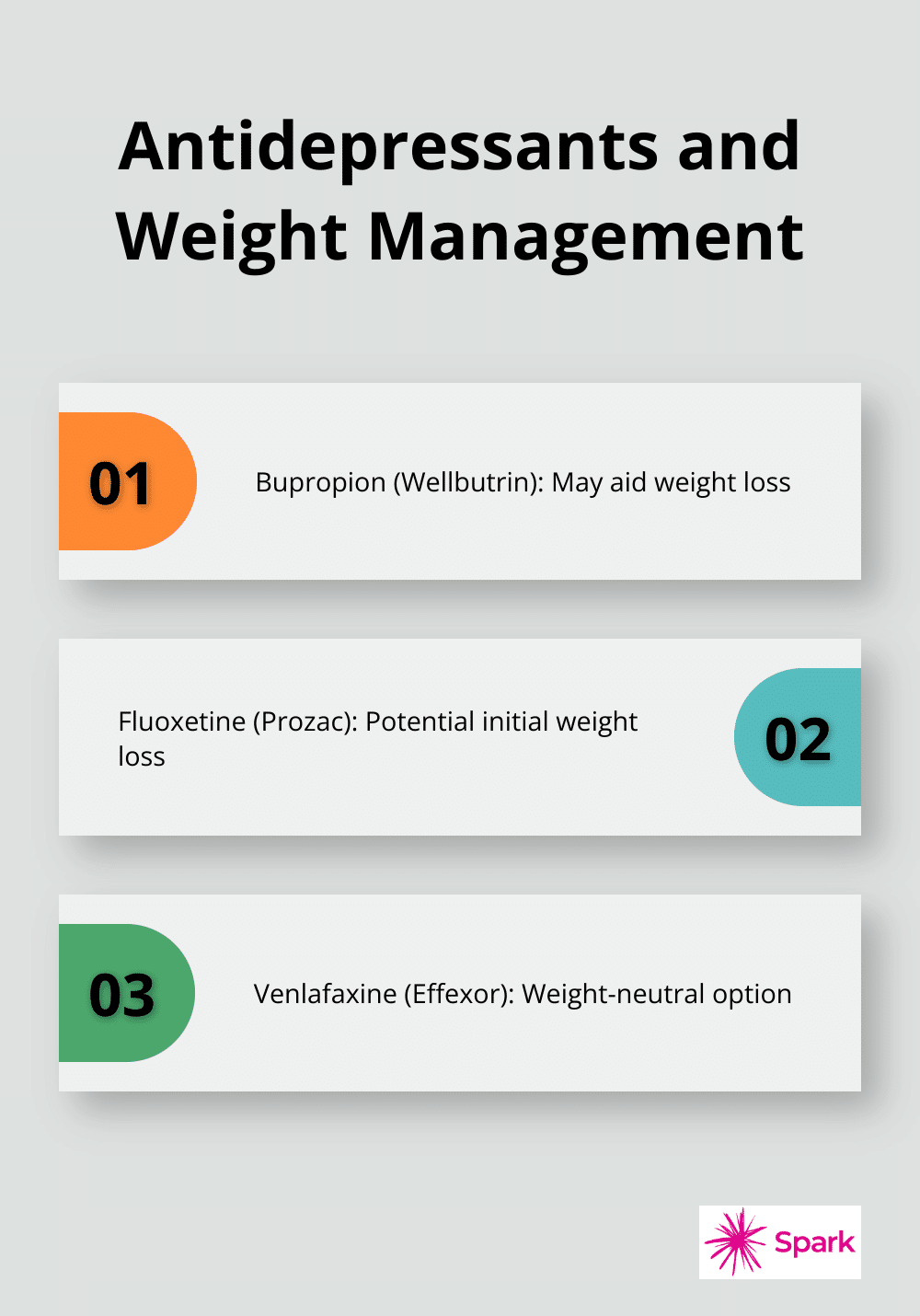
Bupropion (brand name Wellbutrin) stands out as an antidepressant that may aid weight loss. Unlike many other antidepressants, bupropion doesn’t typically cause weight gain and may lead to weight loss in some individuals.
A 2016 study found that bupropion is the only antidepressant that tends to be linked to weight loss over two years. This weight loss effect stems from bupropion’s impact on dopamine and norepinephrine levels in the brain, which can reduce appetite and increase metabolism.
Bupropion also serves as a smoking cessation aid, which may contribute to its weight loss effects. If you consider bupropion, discuss with your healthcare provider whether it suits your specific situation.
Fluoxetine (Prozac): Initial Weight Loss Potential
Fluoxetine (commonly known as Prozac) is another antidepressant that may support weight loss goals, particularly in the short term. Some individuals experience weight gain with long-term use. The initial weight loss relates to fluoxetine’s impact on serotonin levels, which can affect appetite and food intake.
Venlafaxine (Effexor): A Weight-Neutral Option
While venlafaxine (Effexor) may not directly cause weight loss, it’s considered a weight-neutral antidepressant. This means it’s less likely to cause significant weight gain compared to other antidepressants.
Personalizing Your Treatment Plan
Everyone responds differently to antidepressants. What works for one person may not work for another. Work closely with your healthcare provider to find the right medication and dosage for your unique needs.
Your provider will consider factors such as your current weight, overall health, and specific depression symptoms when prescribing an antidepressant. They may also recommend combining medication with lifestyle changes (such as regular exercise and a balanced diet) to support both your mental health and weight management goals.
Regular follow-ups and open communication with your healthcare provider allow for timely adjustments to your treatment plan if needed. This ensures you get the most benefit from your medication while managing any potential side effects.
As we explore antidepressants that may support weight loss, it’s important to consider how lifestyle changes can enhance both depression treatment and weight management. Let’s examine some effective strategies in the next section.
Enhancing Mental Health and Weight Management Through Lifestyle Changes
The Power of Exercise
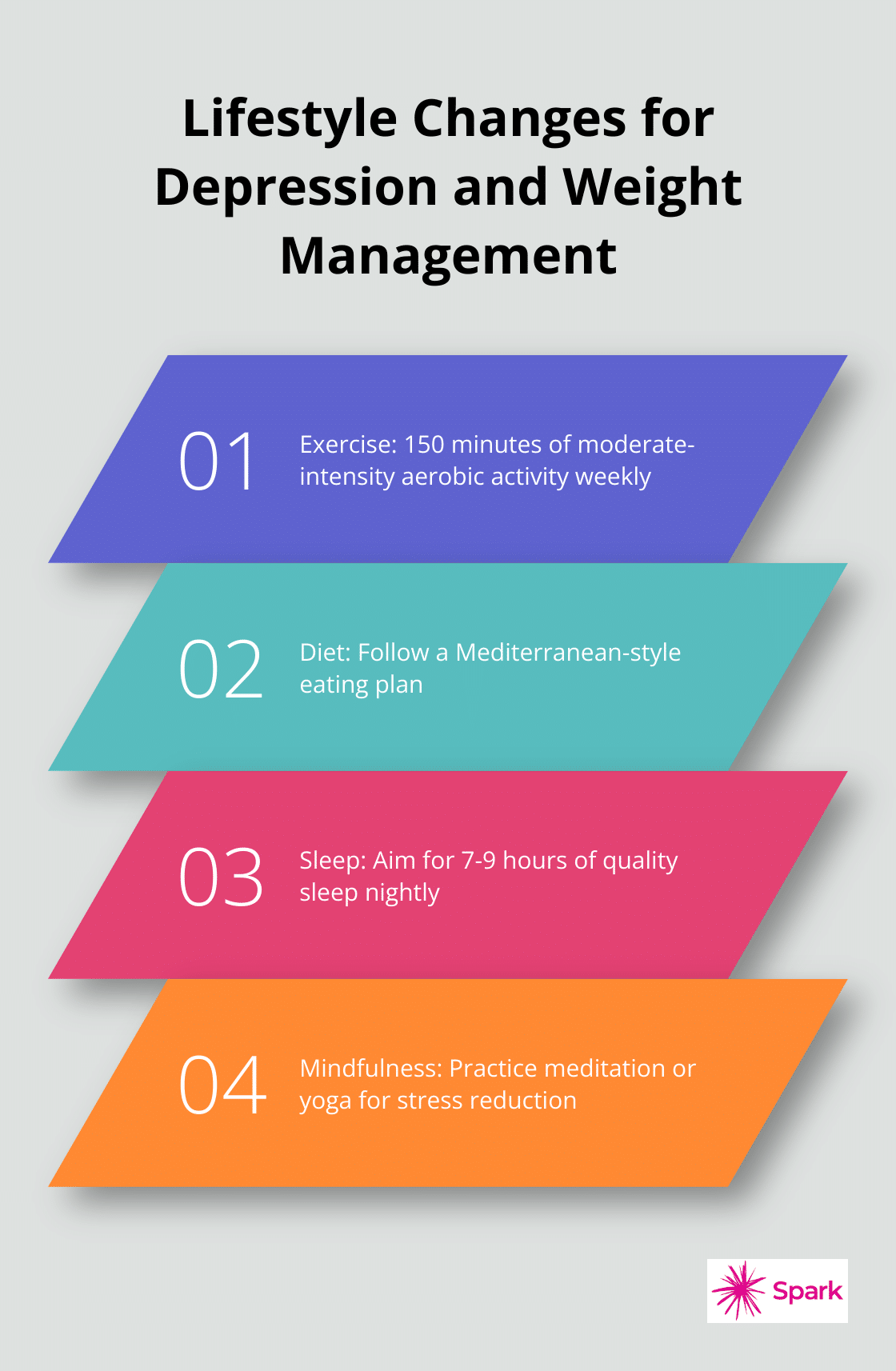
Physical activity serves as a potent tool for managing depression and weight. A study in the American Journal of Psychiatry revealed that just one hour of exercise weekly can prevent 12% of future depression cases. For weight loss, try to engage in at least 150 minutes a week of moderate-intensity aerobic activity, as recommended by the Centers for Disease Control and Prevention (CDC).
Start with activities you enjoy. A 10-minute walk during lunch breaks or a 20-minute yoga session before bed can make a difference. Increase duration and intensity gradually as you build consistency.
Nutrition for Mind and Body
Your diet affects both mood and weight. A Mediterranean-style diet (rich in fruits, vegetables, whole grains, lean proteins, and healthy fats) may improve depressive symptoms and remission rates.
Include mood-boosting foods like fatty fish (omega-3s), dark chocolate (serotonin-producing tryptophan), and fermented foods (gut health support). For weight management, focus on portion control and mindful eating.
Meal planning helps make healthier choices. Prepare nutritious snacks like cut vegetables with hummus or Greek yogurt with berries to avoid processed foods when hunger strikes.
The Importance of Quality Sleep
Poor sleep can worsen depression symptoms and complicate weight loss. The National Sleep Foundation recommends 7-9 hours of sleep nightly for adults.
Establish a consistent sleep schedule, even on weekends. Create a relaxing bedtime routine, such as reading a book or practicing gentle stretches. Limit screen time before bed, as blue light disrupts your sleep-wake cycle.
For those who struggle with insomnia, cognitive behavioral therapy for insomnia (CBT-I) shows promising results. CBT-I appears to be effective and safe for improving insomnia conditions in individuals with comorbid depression.
Mindfulness and Stress Management
Incorporate mindfulness practices into your daily routine. Meditation, deep breathing exercises, or yoga can reduce stress and improve overall mental well-being. These practices also promote mindful eating, which can support weight management efforts.
Social Connections and Support
Maintain strong social connections. Engage with friends, family, or support groups regularly. Social support plays a vital role in managing depression and can provide accountability for weight management goals.
Final Thoughts
Depression and weight management often intertwine, presenting unique challenges. We at Spark Healthcare explored medications for depression that help with weight loss, offering hope for those struggling with this dual challenge. Antidepressants like bupropion, fluoxetine, and venlafaxine have shown potential in supporting weight loss or maintaining a neutral weight effect.
Combining medication with lifestyle changes can enhance both depression treatment and weight management efforts. Regular exercise, balanced nutrition, quality sleep, and stress management techniques all play vital roles in improving mental health and supporting weight loss goals. Everyone’s response to medication is unique, which highlights the need for personalized treatment plans.
We encourage you to consult with healthcare professionals to develop a tailored solution that addresses your specific needs. At Spark Mental Health, we offer personalized, evidence-based telepsychiatry services for conditions like depression, anxiety, and ADHD. Our team of experts can work with you to create an individualized care plan that considers both your mental health and weight management goals.