

Anorexia nervosa is a complex eating disorder that can have severe physical and psychological consequences. At Spark Mental Health, we understand the challenges faced by those struggling with this condition.
Cognitive Behavioral Therapy (CBT) has emerged as a powerful tool in the treatment of anorexia. This blog post explores how CBT can help break the cycle of disordered eating and promote recovery.
Understanding Anorexia Nervosa
Definition and Diagnostic Criteria
Anorexia nervosa is a severe eating disorder characterized by an intense fear of weight gain and a distorted body image. The American Psychiatric Association defines anorexia as a condition where individuals refuse to maintain bodyweight at or above minimally normal weight for height/age (less than 85th percentile).
Physical and Psychological Effects
The physical signs of anorexia are alarming. Patients often experience:
- Dramatic weight loss
- Fatigue and weakness
- Hair loss and dry skin
- Growth of fine body hair (lanugo)

In severe cases, anorexia can lead to heart problems, osteoporosis, and even organ failure.
Psychologically, anorexia takes a heavy toll. People with this disorder often struggle with:
- Intense anxiety around food and eating
- Obsessive behaviors related to calorie counting or exercise
- Depression and social withdrawal
Common Misconceptions About Anorexia
Several myths surround anorexia, which can hinder understanding and treatment:
- Myth: Anorexia only affects young, affluent white women.
Reality: This disorder doesn’t discriminate. It affects people of all ages, genders, races, and socioeconomic backgrounds. The one-year prevalence of anorexia nervosa is 0.16% for females and 0.09% for males. - Myth: Anorexia is a choice or a diet gone too far.
Reality: Anorexia is a serious mental health condition with complex biological, psychological, and social factors at play. - Myth: Simply eating more will cure anorexia.
Reality: Recovery is far more complex than increasing food intake. It requires comprehensive treatment addressing both physical and psychological aspects of the disorder.
These misconceptions can delay treatment and recovery. That’s why accurate information and evidence-based treatment options (like those offered by Spark Mental Health) are essential for those struggling with anorexia nervosa.
As we move forward, we’ll explore how Cognitive Behavioral Therapy (CBT) has become a powerful tool in treating anorexia and breaking the cycle of disordered eating.
How CBT Transforms Anorexic Thinking
Identifying and Changing Negative Patterns
Cognitive Behavioral Therapy (CBT) stands as a powerful tool in treating anorexia nervosa. CBT focuses on identifying and changing negative thought patterns and behaviors that fuel the disorder. This approach has shown significant success in helping individuals overcome anorexia and develop healthier relationships with food and their bodies.
Reshaping Distorted Thoughts
CBT for anorexia targets the distorted thoughts that drive restrictive eating behaviors. Patients learn to recognize and challenge these thoughts. For example, the belief “I must be thin to be worthy” undergoes examination and replacement with more balanced perspectives. This process, known as cognitive restructuring, breaks the cycle of anorexic thinking.
Modifying Behaviors Step-by-Step
CBT doesn’t just focus on thoughts; it also tackles behaviors head-on. Therapists work with patients to modify eating habits and reduce anxiety around food. This might involve creating a structured meal plan, starting with small, manageable changes and progressing towards more balanced eating.
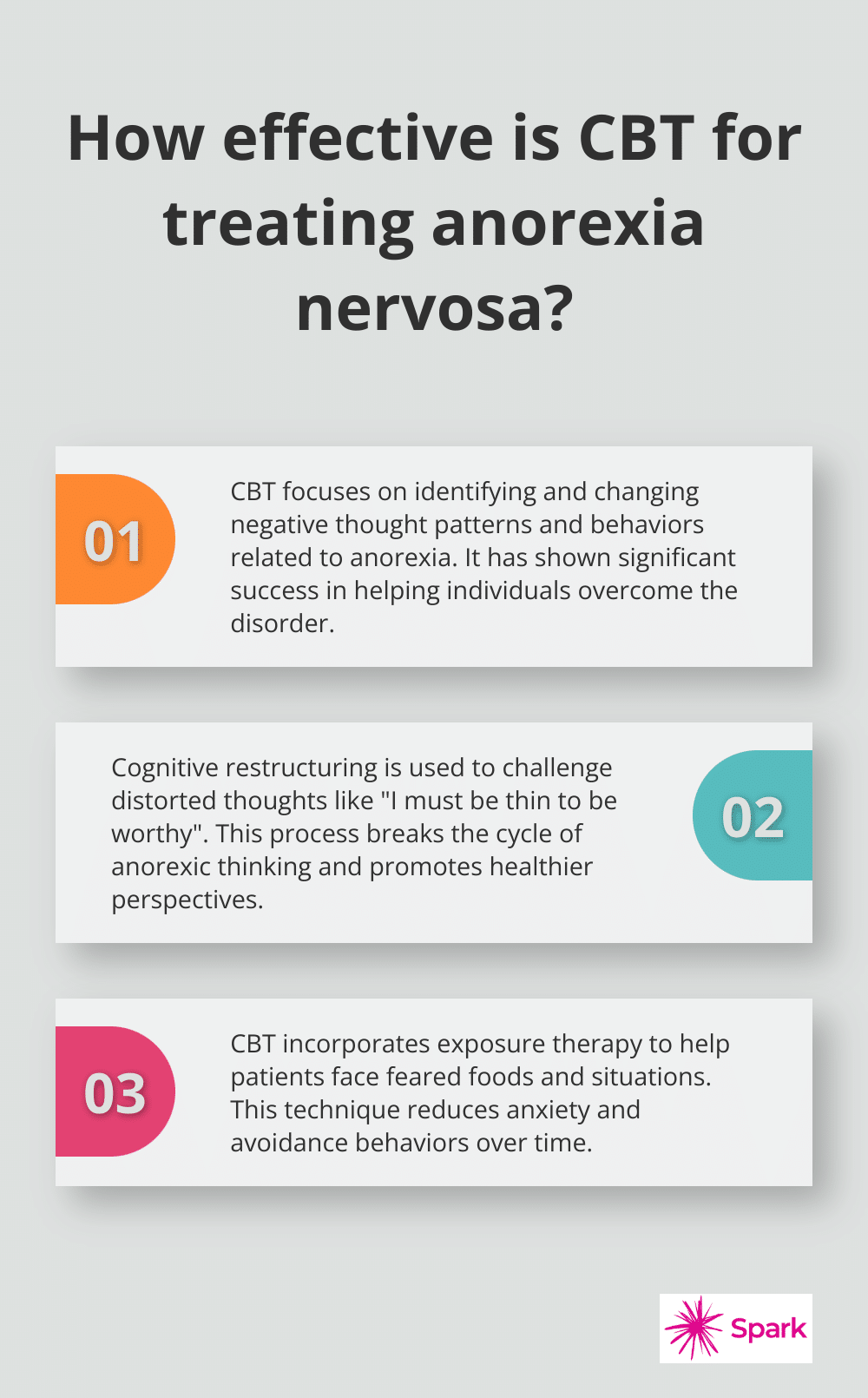
One effective technique is exposure therapy. Patients face feared foods or situations (like eating in public) in a controlled and supportive environment. This helps reduce anxiety and avoidance behaviors over time.
Building Coping Skills
A key component of CBT for anorexia involves developing healthy coping mechanisms. Patients learn skills to manage stress, anxiety, and negative emotions without resorting to restrictive eating. These might include mindfulness techniques, relaxation exercises, or journaling.
CBT for anorexia is not a quick fix, but a journey of self-discovery and change. It requires commitment and hard work, but the results can transform lives. With the right support and tools (such as those provided by experienced mental health professionals), recovery from anorexia becomes a realistic goal.
As we explore the effectiveness of CBT in treating anorexia, it’s important to consider the research and studies that support this approach. Let’s examine the evidence behind CBT’s success in the next section.
Does CBT Work for Anorexia?
Evidence-Based Success Rates
Cognitive Behavioral Therapy (CBT) has proven to be a leading treatment for anorexia nervosa. However, specific success rates for CBT in treating anorexia are not clearly established in the provided research. A review by Agras (2017) describes the evolution of CBT for bulimic disorders, but does not provide specific success rates for anorexia treatment.
Endorsement by Health Authorities
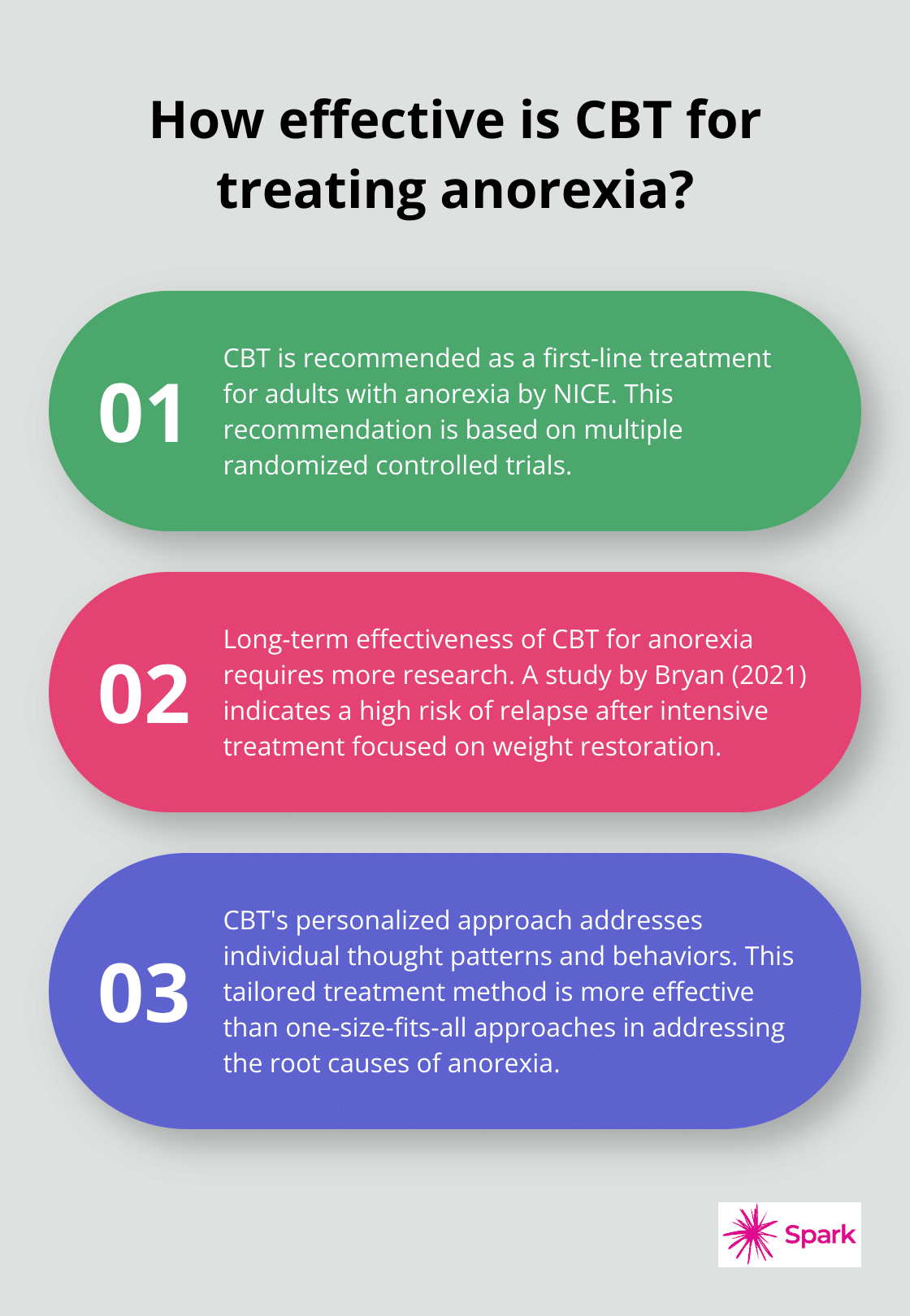
The National Institute for Health and Care Excellence (NICE) recommends CBT as a first-line treatment for adults with anorexia. This endorsement stems from multiple randomized controlled trials that demonstrate CBT’s ability to address both physical and psychological aspects of the disorder.
Long-Term Effectiveness
CBT’s long-term effectiveness in treating anorexia requires further research. A study by Bryan (2021) notes that while intensive treatment focusing on weight restoration can remediate many symptoms in the short term, there is a high risk of relapse. This suggests that the long-term effectiveness of CBT for anorexia may be more complex than previously thought.
Personalized Approach
The personalized nature of CBT contributes significantly to its success. By tailoring treatment to each individual’s specific thought patterns and behaviors, CBT addresses the root causes of anorexia more effectively than one-size-fits-all approaches. Telepsychiatry services (like those offered by Spark Mental Health) incorporate these personalized CBT techniques, allowing patients to access expert care from home.
Complementary Treatments
While CBT shows promising results, recovery from anorexia often requires a multi-faceted approach. Some patients may benefit from additional interventions, such as nutritional support or medication management, alongside CBT. Working with experienced professionals who can adapt the treatment plan is essential for optimal outcomes.
Final Thoughts
Cognitive Behavioral Therapy (CBT) empowers individuals to break free from anorexia nervosa. This evidence-based approach tackles distorted thoughts and behaviors, offering hope for those struggling with this complex disorder. Professional support plays a vital role in developing effective coping strategies and achieving lasting recovery from anorexia.
Spark Mental Health provides personalized telepsychiatry services that incorporate CBT techniques for anorexia and other mental health conditions. Our experienced team works closely with each patient to create tailored strategies for overcoming anorexia. We strive to offer compassionate, effective care through flexible online scheduling and a commitment to accessibility.

Recovery from anorexia becomes possible with the right support and treatment. Individuals who struggle with anorexia or other eating disorders should not hesitate to seek help. Professional guidance and evidence-based therapies like CBT can help people reclaim their lives from the grip of anorexia.