

Childhood trauma can cast a long shadow over our adult lives, affecting our relationships, self-esteem, and overall well-being. At Spark Mental Health, we understand the profound impact these early experiences can have on mental health.
Childhood trauma therapy for adults offers a path to healing and reclaiming your life. This blog post explores effective therapeutic approaches and what to expect on your journey towards recovery.
Unraveling Childhood Trauma’s Lasting Impact
The Nature of Childhood Trauma
Childhood trauma extends beyond difficult experiences. It encompasses events that overwhelm a child’s ability to cope, leaving deep emotional scars. These wounds don’t fade with time but shape adult lives profoundly, influencing relationships, self-perception, and overall mental health.

Trauma in childhood takes many forms. Physical or sexual abuse, neglect, witnessing violence, or experiencing a severe accident or illness are common examples. Less obvious forms include emotional abuse, bullying, or living with a parent with untreated mental illness.
Adult Manifestations of Childhood Trauma
The effects of childhood trauma often persist into adulthood. Adverse childhood experiences (ACEs) are strongly related to the development of risk factors for disease and well-being throughout the life course.
Adults who’ve experienced childhood trauma may struggle with:
- Difficulty regulating emotions
- Trust issues in relationships
- Chronic anxiety or depression
- Low self-esteem
- Substance abuse problems
Recognizing the Signs
Identifying signs of unresolved childhood trauma is essential for seeking appropriate help. Some common symptoms include:
- Hypervigilance or feeling constantly on edge
- Difficulty forming or maintaining close relationships
- Unexplained physical symptoms (e.g., headaches or digestive issues)
- Flashbacks or intrusive thoughts about past traumatic events
- Self-destructive behaviors or thoughts
Many adults don’t initially connect their current struggles with past trauma. Through therapy, these links often become clear, opening the door to healing.
The Brain’s Response to Childhood Trauma
Neuroscience research shows that childhood trauma can alter brain structure and function. Studies in patients with PTSD show alterations in brain areas implicated in animal studies, including the amygdala, hippocampus, and prefrontal cortex.
Understanding these neurological impacts explains why trauma’s effects can be so pervasive and long-lasting. It also underscores the importance of targeted therapeutic interventions to address these deep-seated changes.
As we move forward, we’ll explore effective therapy approaches that address childhood trauma in adults, providing hope for healing and recovery.
Effective Therapies for Adult Survivors of Childhood Trauma
Cognitive-Behavioral Therapy: Rewiring Thought Patterns
Cognitive-Behavioral Therapy (CBT) is a widely used approach for treating PTSD in adults, including those with childhood trauma. This therapy helps clients identify and challenge negative thought patterns that stem from their traumatic experiences. For instance, a client who experienced neglect might believe they’re unworthy of love. Through CBT, they learn to recognize this as a distorted belief and replace it with more realistic, positive thoughts.

CBT typically involves regular sessions over a period of time. Clients often receive homework assignments to practice new coping skills between sessions. Research shows that CBT can be effective in reducing PTSD symptoms in routine clinical care settings.
EMDR: Processing Trauma Through Eye Movements
Eye Movement Desensitization and Reprocessing (EMDR) is another powerful tool in the therapeutic arsenal. This approach uses bilateral stimulation (often in the form of guided eye movements) to help the brain process traumatic memories. EMDR can be particularly effective for clients who struggle to verbalize their experiences.
EMDR treatment typically consists of multiple sessions. During these sessions, clients focus on traumatic memories while following the therapist’s finger movements with their eyes. This dual attention allows the brain to process the trauma in a new way, reducing its emotional impact. Meta-analyses have reported comparable effect sizes for CBT and EMDR therapy in treating PTSD, with both considered highly efficacious in reducing symptoms.
Internal Family Systems: Healing the Inner Child
Internal Family Systems (IFS) therapy offers a unique perspective on healing childhood trauma. This approach views the mind as composed of different “parts” or subpersonalities. In trauma survivors, certain parts may remain stuck in the past, carrying the pain and fear of childhood experiences.
IFS therapy helps clients identify these parts and work with them compassionately. For example, a client might discover a “protector” part that uses anger to keep others at bay, and a vulnerable “child” part that holds the original trauma. Through IFS, clients learn to nurture these parts, leading to greater self-understanding and healing.
While research on IFS continues to emerge, early studies show promise. A pilot study published in the Journal of Rheumatology found that IFS therapy led to significant improvements in pain and depression symptoms in patients with rheumatoid arthritis, many of whom had histories of childhood trauma.
Tailoring Treatment to Individual Needs
At Spark Mental Health, we understand that each client’s experience with childhood trauma is unique. We often combine elements from different therapies to create a comprehensive treatment plan. Our telepsychiatry services make it easy for clients to access these evidence-based treatments from the comfort of their own homes.
Healing from childhood trauma is possible with the right support and therapeutic approach. As we move forward, let’s explore what you can expect during your healing journey and how these therapies unfold in practice.
What Happens in Adult Therapy for Childhood Trauma?
Initial Assessment and Goal Setting
Adult therapy for childhood trauma starts with a comprehensive assessment. Your therapist will ask about your childhood, current symptoms, and trauma impacts. This step helps understand your unique experiences and needs. You control what you share and when.
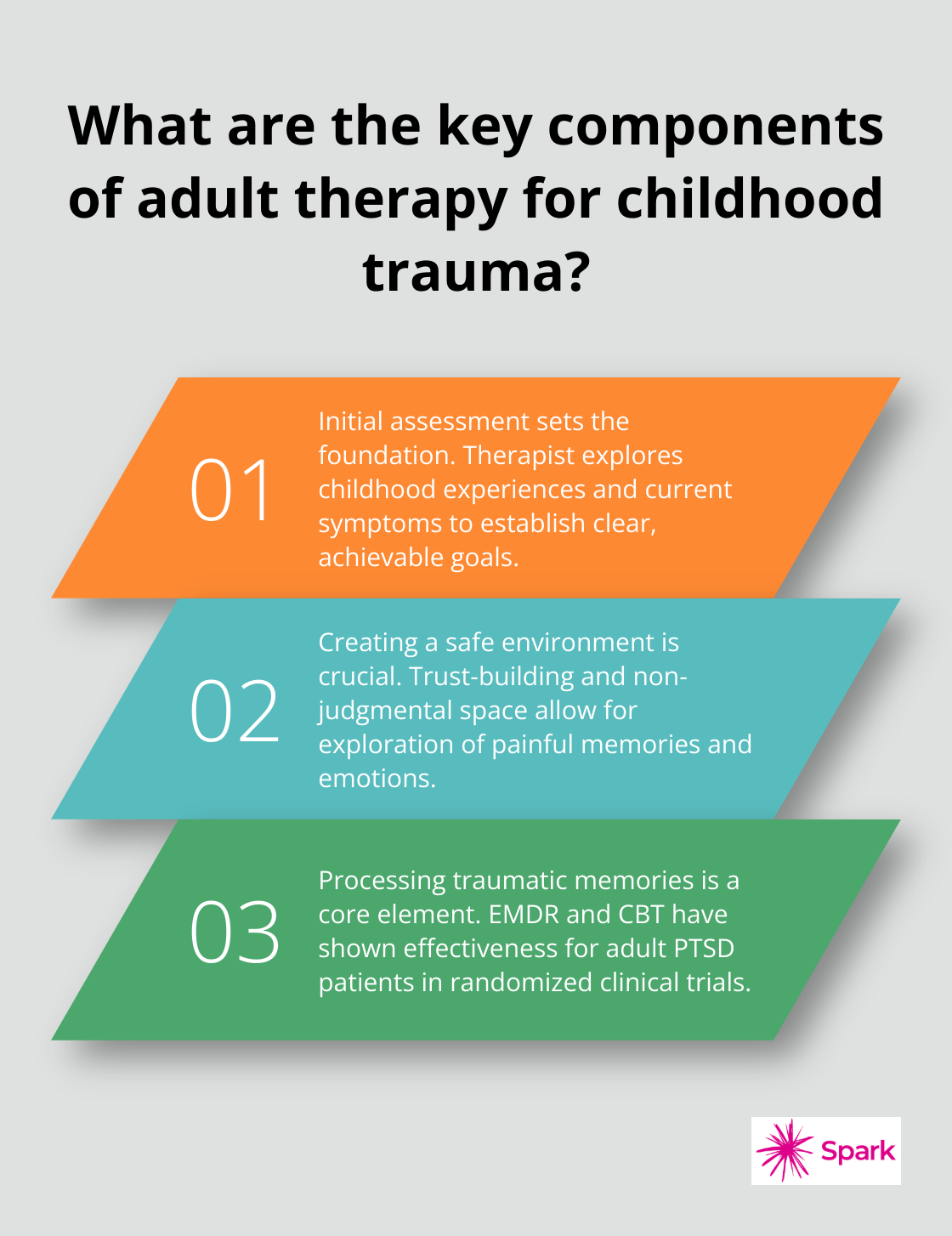
During this phase, you and your therapist will set clear, achievable goals. These might include anxiety reduction, relationship improvement, or processing specific traumatic memories. Concrete goals help track progress and keep therapy focused.
Creating a Safe Therapeutic Environment
Trust forms the foundation of effective trauma therapy. Your therapist will create a safe, non-judgmental space for you to explore painful memories and emotions. This process takes time – don’t feel discouraged if you don’t immediately connect with your therapist.
Therapy for PTSD may include education about the condition, breathing techniques to reduce stress, and exposure practice with real-world situations.
Processing Traumatic Memories
As therapy progresses, you’ll start to process traumatic memories and associated emotions. This phase can be intense and may temporarily increase distress. It’s normal to feel worse before feeling better. Your therapist will guide you through this process at a manageable pace.
Different therapeutic approaches handle this phase differently. EMDR and CBT have been shown to be effective for adult patients with PTSD, with EMDR being at least as effective as CBT in randomized clinical trials. The goal is to process these experiences to reduce their emotional impact over time.
Developing Coping Skills
Alongside trauma processing, you’ll learn practical coping skills to manage symptoms and build resilience. These might include:
- Grounding techniques for managing flashbacks or anxiety
- Mindfulness practices for emotional regulation
- Communication skills for healthier relationships
- Strategies for setting boundaries
Your therapist will tailor these skills to your specific needs and challenges. Practice is essential – the more you use these skills in daily life, the more effective they become.
Applying Healing to Daily Life
As you progress in therapy, you’ll notice changes in your thoughts, feelings, and behaviors. You might react differently to triggers, feel more confident in relationships, or experience a greater sense of self-worth.
Your therapist will help you integrate these changes into your daily life. This might involve:
- Practicing new communication styles with loved ones
- Gradually facing situations you’ve avoided
- Recognizing and celebrating small victories (even seemingly insignificant ones)
Healing isn’t linear. You might experience setbacks along the way, but these are normal parts of the process. Your therapist will support you through these challenges.
Final Thoughts
Childhood trauma casts a long shadow, but healing remains possible. Childhood trauma therapy for adults offers a path to recovery, helping individuals process past experiences and develop new coping strategies. Through evidence-based approaches like Cognitive-Behavioral Therapy, EMDR, and Internal Family Systems, survivors can work through their trauma and build resilience.

Taking the first step towards healing can feel daunting, but it marks a courageous and transformative decision. If you recognize signs of unresolved childhood trauma in your life, professional help exists. You don’t need to navigate this journey alone.
At Spark Mental Health, we offer personalized telepsychiatry services for conditions including PTSD related to childhood trauma. Our flexible online scheduling and at-home treatment options make it easier to access the support you need. With individualized care plans, we support your healing journey.