

Finding ADHD medications with the least side effects is a top priority for many patients and healthcare providers. At Spark Mental Health, we understand the importance of balancing effective treatment with minimal adverse effects.
This blog post explores non-stimulant options, stimulant medications with improved side effect profiles, and complementary approaches to enhance overall treatment outcomes. We’ll guide you through the latest advancements in ADHD medication management, helping you make informed decisions about your care.
Non-Stimulant ADHD Medications: A Gentler Approach
Understanding Non-Stimulant Medications
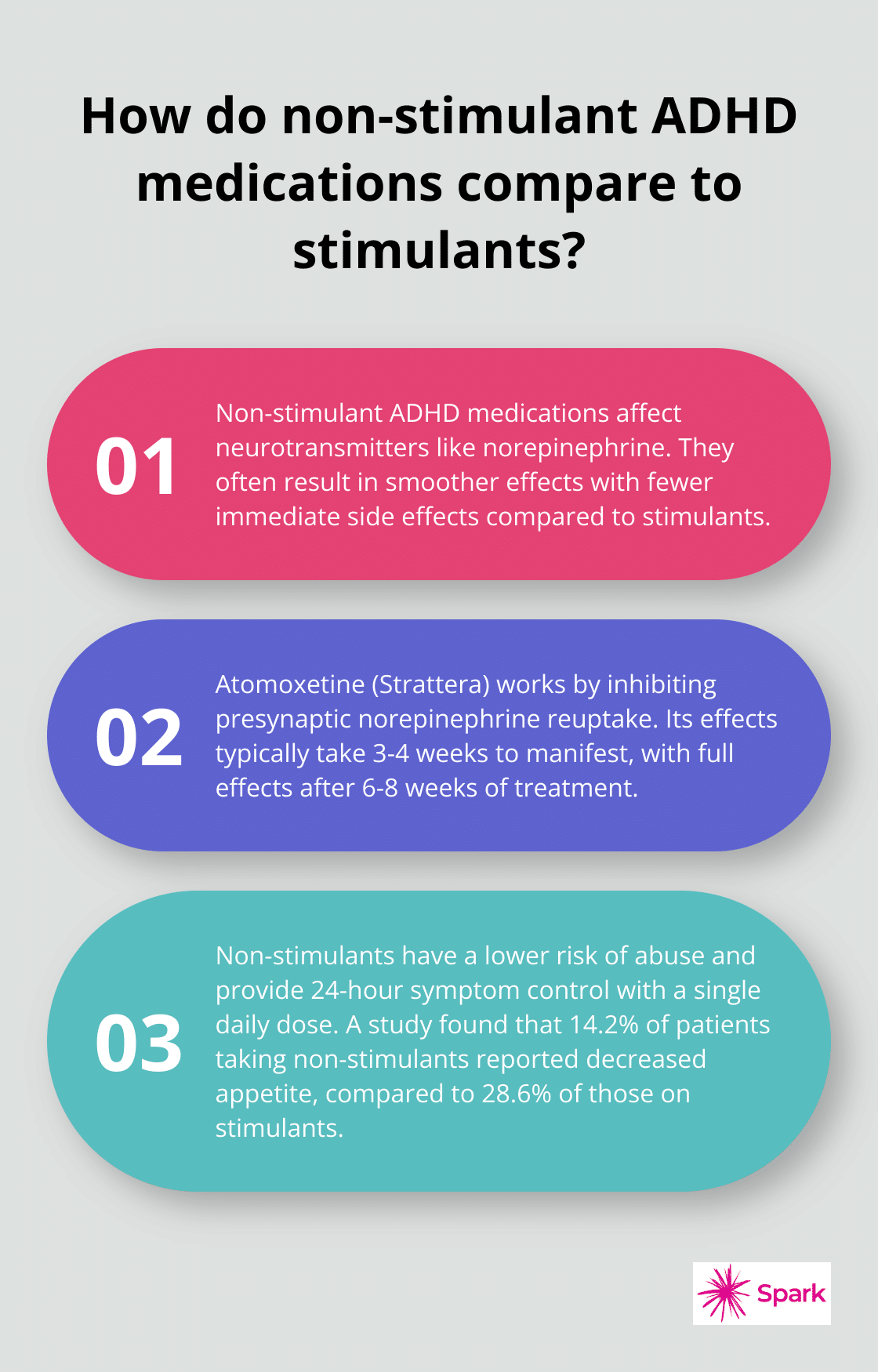
Non-stimulant medications for ADHD provide an alternative treatment path for individuals who experience adverse effects from stimulants or prefer a different approach. These medications affect neurotransmitters like norepinephrine, rather than directly increasing dopamine levels as stimulants do. This difference often results in a smoother effect with fewer immediate side effects.
How Non-Stimulants Work
Atomoxetine (Strattera) works by selectively inhibiting presynaptic norepinephrine reuptake. This mechanism can improve focus and reduce impulsivity without the “jittery” feeling some experience with stimulants. The effects of non-stimulants typically take longer to manifest, with patients noticing improvements in 3-4 weeks and full effects after 6-8 weeks of treatment.
Benefits of Non-Stimulant Medications
Non-stimulant medications offer several advantages:
- Lower risk of abuse: This makes them a preferred choice for patients with a history of substance abuse or those at higher risk.
- Longer-lasting effect: Many non-stimulants provide 24-hour symptom control with a single daily dose.
- Less impact on appetite and sleep: A study found that 14.2% of patients taking non-stimulants reported decreased appetite, compared to 28.6% of those on stimulants.
Popular Non-Stimulant Options
Several non-stimulant medications are available for ADHD treatment:
- Atomoxetine (Strattera): FDA-approved for both children and adults, it’s often the first non-stimulant choice for ADHD.
- Guanfacine (Intuniv): Effective for reducing ADHD symptoms, including hyperactivity-impulsivity and inattentiveness. It’s available in an extended-release form for once-daily dosing. Some patients report improved emotional regulation with guanfacine.
- Clonidine (Kapvay): Similar to guanfacine but potentially more sedating, it’s often used when sleep disturbances accompany ADHD symptoms.
- Bupropion: While not FDA-approved for ADHD, it’s sometimes prescribed off-label and can be helpful for patients with co-occurring depression.
Choosing the Right Medication
When considering non-stimulant options, it’s important to discuss specific symptoms, lifestyle, and any co-existing conditions with a healthcare provider. Factors such as the patient’s age, overall health, and potential drug interactions should all be taken into account.
As we move forward, let’s explore stimulant ADHD medications that have been developed with improved side effect profiles, offering another set of options for those seeking effective treatment with minimal adverse effects.
Optimizing Stimulant Medications for ADHD
Extended-Release Formulations: Smoother Symptom Control
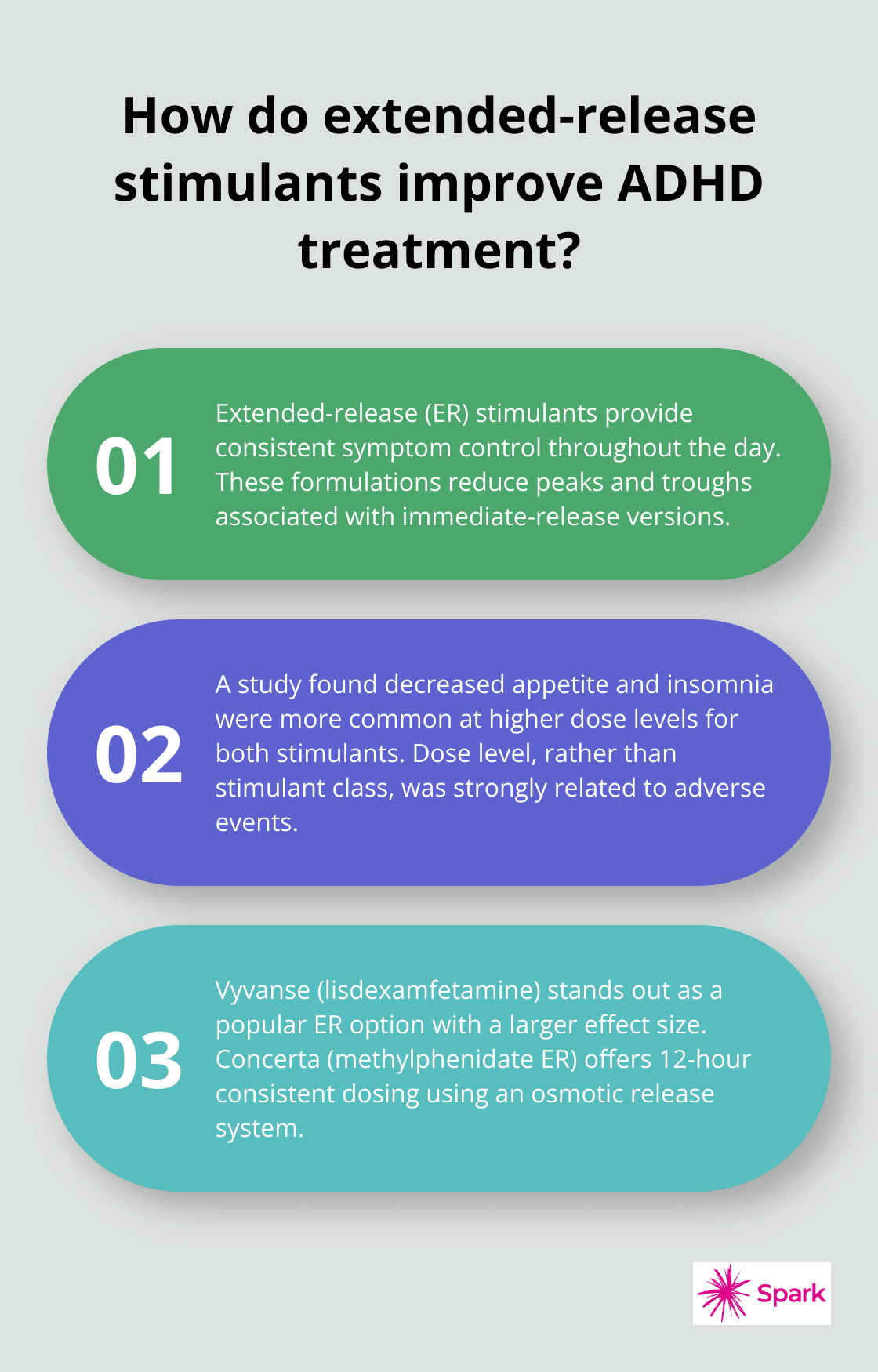
Extended-release (ER) stimulants have transformed ADHD treatment by providing consistent symptom control throughout the day. These formulations release the medication gradually, which reduces the peaks and troughs associated with immediate-release versions. A study found that decreased appetite and insomnia were more common at higher dose levels for both stimulants, and dose level, rather than stimulant class, was strongly related to adverse events.
Vyvanse (lisdexamfetamine) stands out as a popular ER option. A meta-analysis found that LDX had an effect size larger than that previously reported for other long-acting stimulants. Concerta (methylphenidate ER) offers another choice, utilizing an osmotic release system to deliver a consistent dose over 12 hours.
Lower-Dose Options: Balancing Efficacy and Tolerability
Starting with lower doses and increasing as needed can significantly reduce side effects while still providing symptom relief.
The methylphenidate transdermal system (Daytrana) allows for flexible dosing. The efficacy of Daytrana in patients diagnosed with ADHD was established in two 7-week controlled clinical trials in children (ages 6-12). This approach provides a level of control not possible with oral medications.
Innovative Approaches to Reducing Side Effects
Recent years have introduced novel stimulant formulations designed to minimize side effects. Adhansia XR (approved in 2019) uses a multilayer release system that provides symptom control for up to 16 hours while potentially reducing the “crash” often experienced as the medication wears off.
Azstarys offers another innovative option. This combination of serdexmethylphenidate and dexmethylphenidate aims to provide rapid onset of action with extended duration, potentially reducing the need for multiple daily doses and associated side effects.
Personalized Treatment Plans
The key to finding the right stimulant medication with minimal side effects lies in personalized treatment plans. Factors such as a patient’s age, weight, metabolism, and specific ADHD symptoms all play a role in determining the most effective medication and dosage.
Regular follow-ups and open communication with healthcare providers allow for fine-tuning of medication regimens. This approach ensures that patients receive the maximum benefit from their ADHD treatment while experiencing the least possible side effects.
As we explore ways to optimize ADHD treatment, it’s important to consider complementary approaches that can enhance the effectiveness of medication while potentially reducing side effects. Let’s examine some non-pharmacological strategies that can support overall ADHD management.
How Lifestyle Changes Enhance ADHD Treatment
Nutrition: Fuel for Your Brain
A balanced diet impacts ADHD symptoms significantly. Lower levels of omega-3 polyunsaturated fatty acids are found in ADHD patients compared to age-matching controls. Complex carbohydrates from whole grains help stabilize blood sugar levels, potentially reducing mood swings and improving focus.

Avoiding artificial food colorings and preservatives may benefit some individuals. The Lancet published a study showing these additives increased hyperactive behavior in some children with ADHD. Try keeping a food diary to identify potential trigger foods that may worsen your symptoms.
Exercise: A Natural Symptom Reducer
Regular physical activity serves as a powerful tool in managing ADHD symptoms. Exercise can improve temporal impulsivity in adult ADHD but did not improve other symptoms and worsened some aspects of performance in controls. Try to engage in at least 150 minutes of moderate aerobic activity or 75 minutes of vigorous aerobic activity per week (as recommended by the Centers for Disease Control and Prevention).
High-intensity interval training (HIIT) shows particular promise. Scientific Reports published a study finding that HIIT improved cognitive function and reduced symptoms in adolescents with ADHD. Consider adding activities like sprinting, jump rope, or burpees to your routine.
Sleep Hygiene: Essential for Symptom Management
Poor sleep exacerbates ADHD symptoms, creating a vicious cycle. Establishing a consistent sleep routine is essential. The National Sleep Foundation recommends adults sleep 7-9 hours per night. To improve sleep quality:
- Maintain a regular sleep schedule (even on weekends).
- Create a relaxing bedtime routine (e.g., reading or gentle stretching).
- Limit screen time before bed (blue light interferes with melatonin production).
- Use a white noise machine or app to block out disruptive sounds.
Mindfulness and Meditation: Calming the ADHD Mind
Mindfulness practices benefit individuals with ADHD. An eight-week group mindfulness program modified for ADHD patients, called the Mindful Awareness Practices (MAPs) for ADHD, has shown promising results.
Start with short, guided meditations using apps (Headspace or Calm). Even 5-10 minutes daily can make a difference. Progressive muscle relaxation is another technique that can help reduce tension and improve focus.
Cognitive Behavioral Therapy: Reshaping Thought Patterns
Cognitive Behavioral Therapy (CBT) serves as a powerful tool for managing ADHD symptoms. The Journal of Attention Disorders found that CBT improved ADHD symptoms and executive functioning in adults. CBT helps you:
- Develop organizational skills and time management strategies
- Improve problem-solving abilities
- Manage impulsivity and emotional regulation
Implementing these lifestyle modifications alongside medication leads to more comprehensive ADHD management. Start with small, manageable changes and build upon them gradually. With patience and persistence, you can develop a holistic approach to managing your ADHD that minimizes side effects and maximizes your quality of life.
Final Thoughts
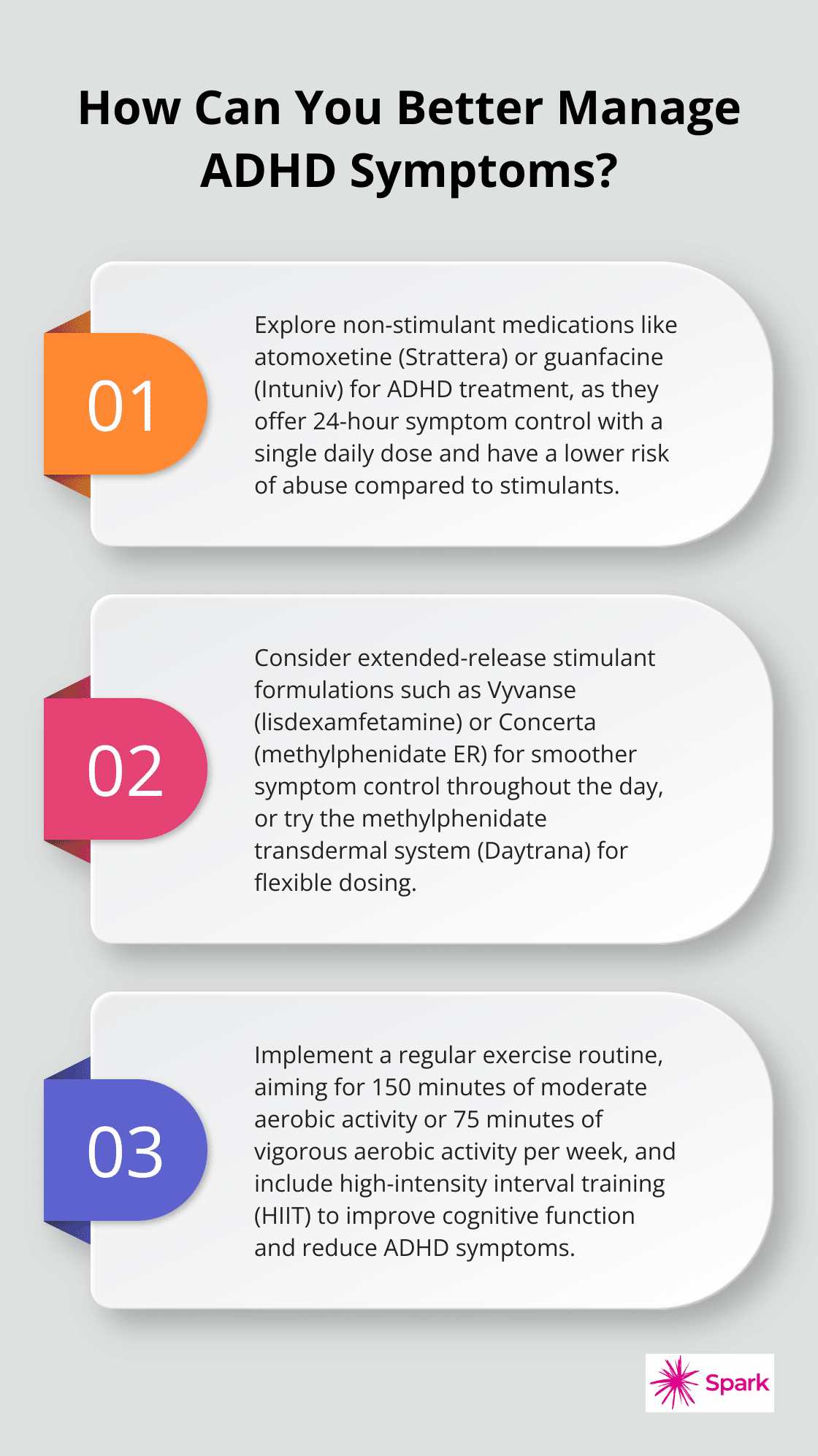
ADHD medications with minimal side effects offer hope for effective symptom management. Non-stimulants like Strattera and Intuniv, along with improved stimulant formulations, provide options for personalized treatment plans. Lifestyle modifications such as proper nutrition, exercise, and mindfulness practices enhance medication effectiveness and reduce potential side effects.
Each individual’s ADHD experience is unique, requiring a tailored approach to treatment. Patients should work closely with healthcare professionals to find the right balance of medication and complementary strategies. This collaborative process ensures the development of a comprehensive treatment plan that addresses ADHD from multiple angles.
Spark Mental Health specializes in creating personalized ADHD treatment plans. Our team of experienced professionals offers telepsychiatry services, allowing access to high-quality care from home. We strive to provide effective, compassionate support for individuals dealing with ADHD through our evidence-based approach and commitment to accessibility.